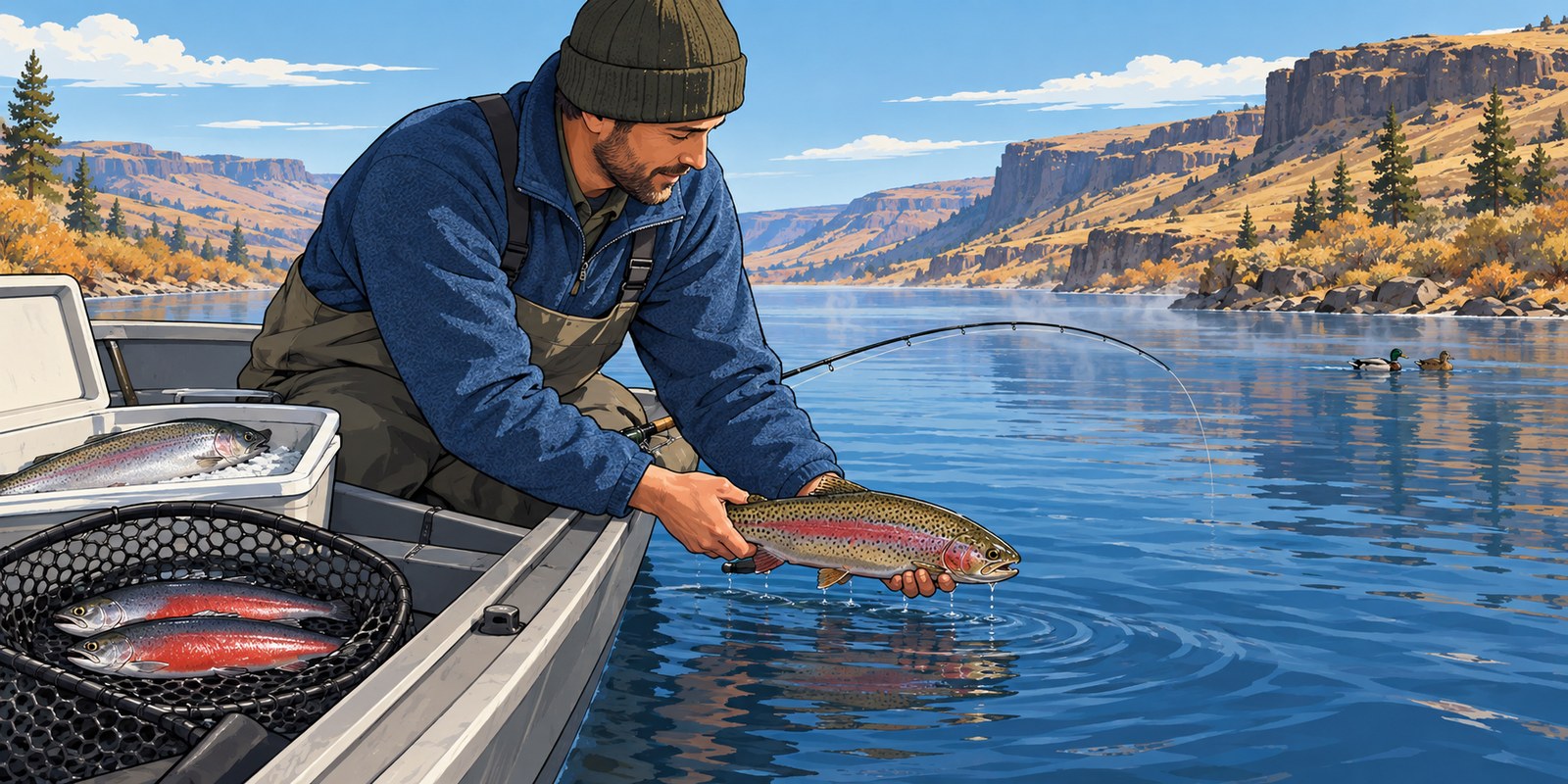
Washington Fish and Wildlife is taking public comments on two proposed fishing rule changes, the department said November 4. On Rufus Woods Lake, anglers could keep only adipose-clipped (hatchery) trout, to protect native redband trout and match the Colville Tribes' rules; the department said all net-pen and stocked fish there are clipped, so it doesn't expect fewer fishing opportunities. On Lake Roosevelt, the daily kokanee limit would drop from six to two, since no clipped hatchery kokanee have been released there in a decade. Comments can be submitted through the department's rulemaking page.
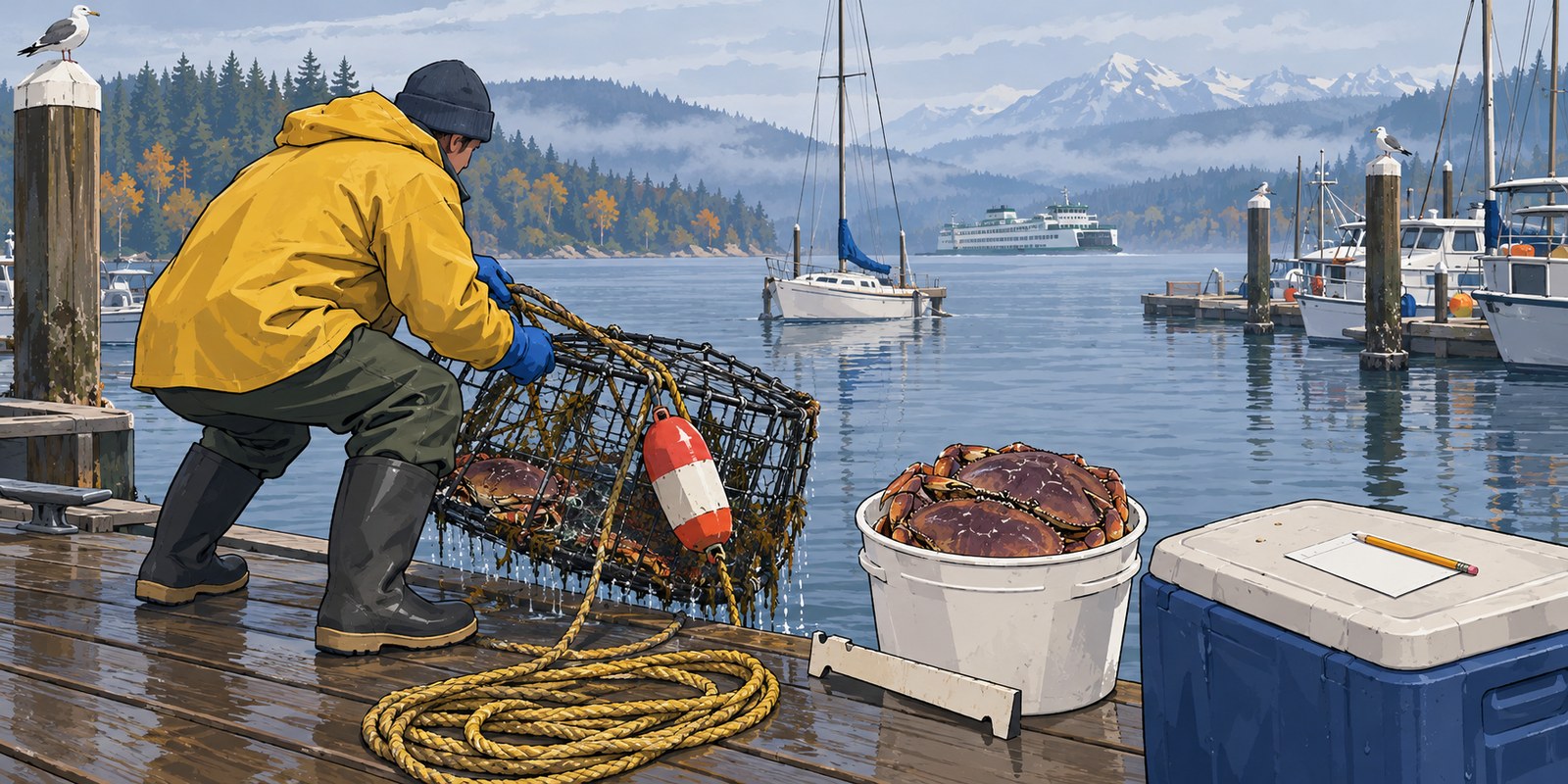
Washington Fish and Wildlife will hold a virtual public meeting on November 18 about raising the penalty for not returning Puget Sound Dungeness crab catch record cards, now $10, the department said November 4. Only 43 percent of summer crab card holders reported their catch in 2024 and 2025, and returns have declined since the 2013-14 season, making it harder to measure the harvest and meet tribal sharing obligations. If you crabbed this year, report your catch by the card's deadline, online or by mail, even if you caught nothing.
openRazor clam digs: Copalis and Mocrocks only, Nov 7–11 (evening low tides)Washington coastLong Beach and Twin Harbors stay closed for marine toxinschecked Nov 3
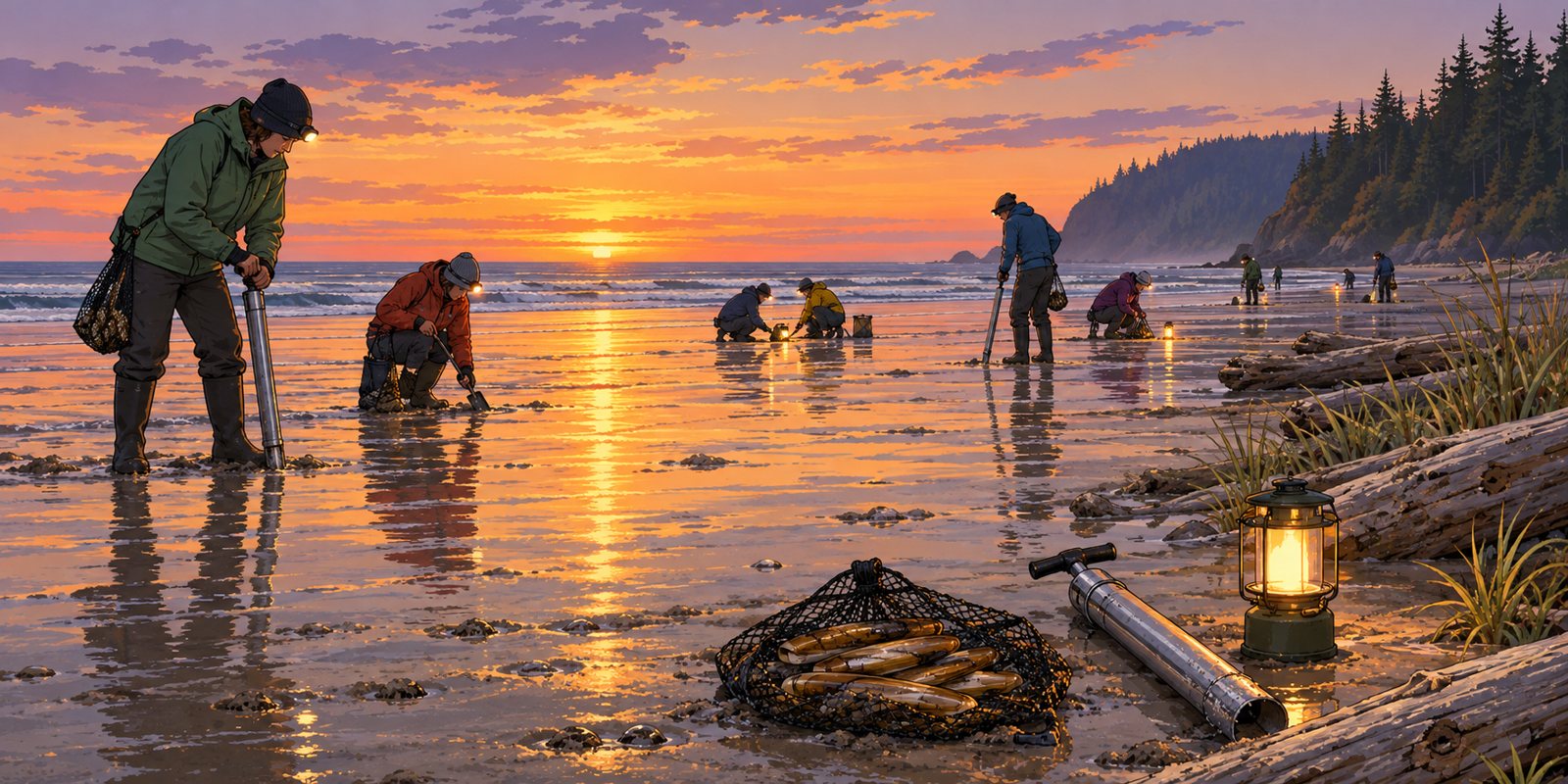
Washington Fish and Wildlife approved five days of razor clam digging on Copalis and Mocrocks beaches only, on evening low tides from November 7 to 11, the department said November 3: Nov. 7, 5:06 p.m., Mocrocks; Nov. 8, 5:44 p.m., Copalis; Nov. 9, 6:19 p.m., Copalis; Nov. 10, 6:54 p.m., Mocrocks; and Nov. 11 (Veterans Day), 7:29 p.m., Mocrocks. Digging is best one to two hours before low tide, and only from noon to midnight. Long Beach and Twin Harbors stay closed because marine toxin levels remain above the safe limit.
The department warned that a bigger swell and less extreme low tides will make digging harder than the first round, and that its summer survey found fewer clams on Copalis and Mocrocks than in recent years, so expect to move around to find clams. Check the National Weather Service ocean forecast and avoid the beach if swells are expected above 11 feet. The daily limit is 15 clams, you must keep the first 15 you dig, and every digger needs a license.
Christopher Stefanou, a New York fishing influencer known online as LI Sharkman, was indicted by a Barnstable County grand jury and arraigned October 21 on five charges, including animal cruelty, illegal shore-based shark fishing and attempting to capture a white shark, over a nighttime trip near Wellfleet's Marconi Beach in October 2025, Surfer reports, citing the Provincetown Independent. Prosecutors allege the group used drones to drop baited lines offshore, fought the shark for more than an hour and hauled it onto the sand to photograph it before release. The shark, tagged by state researchers in 2024, was later detected alive. The charges are allegations that have not been proven in court. Massachusetts prohibits targeting white sharks.
Washington Fish and Wildlife will hold a virtual town hall on Tuesday, November 10, from 6 to 8 p.m., to discuss planning for the 2026-27 coastal steelhead seasons, the department said November 2. Managers will present last season's escapement figures, preliminary forecasts and proposed regulations, with time for questions and public comment. The meeting is on Zoom and requires pre-registration through the department's website. 'We're focused on balancing wild steelhead conservation with providing meaningful fishing opportunities for hatchery steelhead,' said Chad Herring, the department's Coastal Region fish program manager.
advisoryRecreational Dungeness crab: opens Nov 7 with no traps; closed north of Fort BraggCalifornia coastHoop nets and snares only; no take or possession north of Fort Braggchecked Nov 2
Recreational Dungeness crabbing opens November 7, but only with hoop nets and snares, and not at all north of Fort Bragg because of domoic acid. The commercial season is delayed until at least January.
California's recreational Dungeness crab season opens Saturday, November 7, but with two big limits, ABC7 reports. Crab traps are not allowed, because of the risk of humpback whales becoming entangled, so crabbers will have to use hoop nets or crab snares. And north of Fort Bragg, where state scientists found unhealthy levels of domoic acid in crab, taking or possessing Dungeness crab is prohibited.
The commercial season is delayed until at least January 1, so local Dungeness crab isn't expected in stores or restaurants for the holidays. Active NorCal reports that three humpback whale entanglements triggered the state's rule, and that hoop-net crabbers must check their nets at least every two hours. The state's next risk assessment is expected in mid-to-late December, when the trap restriction could be lifted or changed.
Before you go, check the California Department of Fish and Wildlife's crab page for the current zones and rules, and its domoic acid closure line at 831-649-2883. The daily limit is 10 crab at least five and three-quarter inches across the shell, and you need a fishing license; a crab trap validation only matters once traps are allowed again.
New York State Department of Environmental Conservation officers used a thermal-imaging drone to record six people fishing for salmon after dark along the Salmon River during an October 3 operation, leading to nine tickets for after-hours fishing, with two anglers also cited for fishing without a license and for using treble hooks illegally, Wired2Fish reports. The tickets are allegations for the local court to decide. The fall run into Lake Ontario's tributaries draws anglers from across the country; check the DEC's special regulations for fishing hours and gear before you go.
California's recreational Dungeness crab season is scheduled to reopen Saturday, November 7, the California Department of Fish and Wildlife's regional fishing pages say. In most of the state it runs through June 30; in Del Norte, Humboldt and Mendocino counties, through July 30.
The scheduled date is not a guarantee. In recent seasons the department has restricted or delayed crab traps because of humpback whales and sea turtles near the coast, and state health agencies have delayed openers in Northern California when crab carried unhealthy levels of domoic acid. Sign up for the department's Whale Safe Fisheries notices and check its current notices before you go; you can also call the domoic acid closure line at 831-649-2883.
The daily bag limit is 10 crab with a minimum size of five and three-quarter inches across the shell, and anyone using a crab trap needs a recreational crab trap validation on top of a fishing license.
Correction, Nov. 2, 2026. Update: The state has since restricted crab traps for the opener and closed recreational crabbing north of Fort Bragg because of domoic acid. Hoop nets and snares are allowed elsewhere. See our November 2 story.
openRazor clam digs: Mocrocks Oct 26 and 29; Copalis Oct 27 and 28Grays Harbor Co., WashingtonNoon to midnight; Long Beach and Twin Harbors closedchecked Oct 26
Washington's first razor clam dig of the season is tonight, Monday, October 26, at Mocrocks Beach, with low tide at 7:18 p.m. at minus 1.2 feet. Digging is allowed only from noon to midnight; the best time is one to two hours before low tide.
The rest of the series: Copalis on Tuesday, October 27 (low tide 8:01 p.m.) and Wednesday, October 28 (8:47 p.m.), and Mocrocks again on Thursday, October 29 (9:38 p.m.). Long Beach and Twin Harbors remain closed because of marine toxins, and the department expects fewer digging days than usual at Copalis and Mocrocks this season.
Diggers need a valid Washington license that covers razor clams. Toxin tests can cancel a dig on short notice, so check the department's emergency rules page before driving to the coast, and bring a lantern or headlamp for the evening tides.
The Stillaguamish River from Marine Drive to the forks near Arlington stays closed to all fishing through November 1 under the emergency rule Washington Fish and Wildlife issued October 7. Check the department's emergency rules page before fishing after that date, in case the closure is extended.
The September advisory about possible tribal citations on the Chehalis River near Oakville has been overtaken by a full closure: the Chehalis, with the rest of the Grays Harbor and Willapa Bay river systems, has been closed to salmon and all game fish since October 24 because of near-record low flows, Washington Fish and Wildlife says. The department may reopen rivers if flows rise.
closedWillapa Bay and Grays Harbor river systems, including the Chehalis, Humptulips, Willapa and Naselle; Copalis, Moclips, Joe Creek, Salmon and upper Quinault rivers; Marine Areas 2-1 and 2-2Grays Harbor, Pacific & Jefferson Cos., WashingtonAll species, most from Oct 24, until flows improve; check each WDFW rulechecked Oct 22
The Chehalis, Humptulips, Willapa and Naselle systems, the Copalis and Moclips, and Marine Areas 2-1 and 2-2 close October 24. The Dungeness opens Friday with a two-coho limit.
Fishing for salmon and all game fish closes Saturday, October 24, on many rivers and streams in Washington's Coastal Region because of near-historic low flows and coho returns well below forecast, the Department of Fish and Wildlife said October 21.
The closures cover the Willapa Bay and Grays Harbor river systems, including the Chehalis, Humptulips, Willapa and Naselle rivers, plus the Copalis and Moclips rivers and Joe Creek. Separate emergency rules issued the same day close the Salmon River and the upper Quinault; check each rule for its start date. Marine Areas 2-1 and 2-2 close too, except the Ocean Shores and Westport boat basins. They add to this month's closures on the Hoh, Quillayute and Clearwater systems, so for the Naselle, the hatchery reach that reopened October 16 closes again Saturday.
"Rivers across much of Western Washington are at near historic low flows following minimal precipitation during the summer and early fall," said Chad Herring, the department's Coastal Region fish program manager. Washington's Department of Ecology declared a statewide drought in April, and several treaty tribes have also cut or closed their fall fisheries.
One opening: the Dungeness River on the North Olympic Peninsula opens to salmon and game fish Friday, October 23, as scheduled, with the salmon limit cut to two hatchery coho. The department says it may reopen closed rivers if flows rise or monitoring shows salmon moving upstream; the Northwest River Forecast Center tracks flows.
openRazor clam digs: Mocrocks Oct 26 and 29; Copalis Oct 27 and 28Grays Harbor Co., WashingtonNoon to midnight only; Long Beach and Twin Harbors closedchecked Oct 20
Washington Fish and Wildlife has approved the first razor clam digs of the season, at Copalis and Mocrocks beaches only, October 26 through 29. Long Beach and Twin Harbors remain postponed until further notice because of elevated marine toxin levels.
The digs alternate beaches to line up with the lowest evening tides, with digging allowed noon to midnight only: Monday, October 26, Mocrocks, low tide 7:18 p.m. at minus 1.2 feet; Tuesday, October 27, Copalis, 8:01 p.m., minus 1.5; Wednesday, October 28, Copalis, 8:47 p.m., minus 1.5; and Thursday, October 29, Mocrocks, 9:38 p.m., minus 1.2. The best digging is one to two hours before low tide.
Expect fewer digging days than usual at Copalis and Mocrocks this season; the summer survey found fewer clams there than in recent years. Toxin testing continues and can cancel a dig at any moment, so check the department's emergency rules page before driving out, and plan for traffic at the beach approaches.
closedHoh and Quillayute watersheds, including Sol Duc, Bogachiel, Calawah, Dickey and tributariesClallam & Jefferson Cos., WashingtonAll species from Oct 19, until further noticechecked Oct 17
Washington Fish and Wildlife is closing the Hoh and Quillayute river systems to all fishing starting Monday, October 19, until further notice. The rule covers the Quillayute River itself, which reopened with reduced limits only on October 6, and every major river feeding it: the Sol Duc, Bogachiel, Calawah including both forks, and Dickey, plus the Hoh and South Fork Hoh outside Olympic National Park, and tributaries including Bear, Beaver, Sitkum and Thunder creeks.
The reason is the same one that closed the neighboring Clearwater on October 16. Coho catches in both basins are running well below expectations, suggesting returns below the preseason forecast, and a dry summer left rivers low enough that Chinook and coho have been holding in the lower rivers instead of moving up to spawn. Recent rain has helped some fish move, but managers remain concerned about how many will reach the spawning grounds.
The department says it may reopen the rivers if conditions improve. Waters inside Olympic National Park follow the park's own fishing rules.
The section of the Naselle River at the Naselle Hatchery in Pacific County, Washington, opened to salmon retention on October 16, and the hatchery reopened to fishing access the same day, but it remains an active construction site through 2027, the Department of Fish and Wildlife says. Stay inside the posted pedestrian areas and out of all construction zones; the department warns that ignoring the boundaries could close public access. Boaters should take extreme care around the new diversion structures near the hatchery, where the layout of the river has changed. Restricted areas will shift during the season, so follow signs, barriers and hatchery staff.
The Clearwater River, the main tributary of the Queets on Washington's Olympic coast, is closed to all fishing from its mouth upstream starting October 16, until further notice, under an emergency rule from the Department of Fish and Wildlife.
In-season monitoring in the Queets basin shows coho harvest well below projections, suggesting this year's return may come in under the preseason forecast. A dry summer left the rivers low, so Chinook and coho have been holding in the lower river instead of moving up to spawn. Recent rain has moved some fish, but managers remain concerned about how many will reach the spawning grounds.
The department says it may reopen the river if conditions improve. It follows similar low-water measures on the coast this month, including the reduced limits and bait ban on the Quillayute. WDFW's Coastal Region office is at 360-249-4628.
advisorySkagit and Cascade rivers, coho rules; Gilligan Creek–Baker River closed Oct 19–21Skagit Co., Washington2 coho Skagit, 4 Cascade; no bait, barbless; to Oct 31checked Oct 16
Washington Fish and Wildlife has updated the Skagit River coho rules, effective immediately through October 31, and changed the dates of the closures for tribal fisheries that this paper reported on October 9.
On the Skagit from Gilligan Creek, east of Sedro-Woolley, to the Baker River, the river was closed to all fishing on October 15 only. It is open October 16 through 18 under the coho rules, closed to all species October 19 through 21, and open again October 22 through 31. The earlier rule had listed a closure from October 12 through 15.
The Cascade River from the mouth to the Rockport-Cascade Road bridge is now open seven days a week for salmon and game fish; it had been closed Sundays through Tuesdays. The salmon limit there is four coho, at least 12 inches.
The rest is unchanged: a two-coho limit on the Skagit from the mouth up to the Marblemount Bridge, 12-inch minimum, all other salmon released, bait banned and single-point barbless hooks required for salmon on both rivers.
openDuckabush, Triton Cove, Belfair State Park, Point Whitney shellfish beachesJefferson & Mason Cos., WashingtonFrom Oct 14; most through Oct 31checked Oct 13
Washington Fish and Wildlife is reopening several public shellfish beaches on Hood Canal starting Wednesday, October 14, after part of a summer biotoxin closure was rescinded in line with a state Department of Health advisory. The department says the move is meant to make up for harvest lost this summer.
Open: Duckabush Tidelands for clams, mussels and oysters until further notice; Belfair State Park for clams, mussels and oysters through October 31; Triton Cove Tidelands for clams and mussels through October 31; and Point Whitney Tidelands and Point Whitney Lagoon for oysters through October 31. Other public beaches in central Hood Canal, north of a line from Triton Head to Tekiu Point and east of a line due south from Sisters Point, follow their normal posted seasons.
Still closed: public beaches in southern Hood Canal south and west of those lines, all public beaches in Port Gamble Bay south of a line from Teekalet Point to Point Julia, and beaches from the mouth of Mats Mats Bay to Paradise Bay, including Port Ludlow Bay.
Biotoxin closures can change quickly. Check the Washington Shellfish Safety Map or the department's Find a Beach tool the day you go, and always confirm the beach's own season.
The Minnesota DNR wants early input, through 4:30 p.m. November 19 on an online questionnaire, on fishing rule proposals. They include matching Wisconsin's bass catch-and-release seasons on the St. Croix River; adding Perch Lake to the St. Louis River boundary-water rules, with a bass catch-and-release season and new walleye size limits; closing Musky Bay on the Mississippi and waters near electric carp barriers; opening several Otter Tail County streams and the water below Locks and Dams 3 and 4; letting the DNR close Grand Marais harbor in fall when brook trout gather there; and aligning Saganaga Lake's walleye length rules with statewide rules.
openMarine Areas 4, 5, 6, 7, 8-1, 8-2, 9 and 12 north of Ayock PointPuget Sound, WashingtonSeven days a week to Dec 31; 10 and 11 undecidedchecked Oct 10
Recreational crabbing opens Saturday, October 10, in Marine Area 8-1 (Deception Pass, Hope Island and Skagit Bay) and Marine Area 8-2 (Port Susan and Port Gardner), seven days a week through December 31, Washington Fish and Wildlife says. The two areas were held back from the October 1 opener until sampling, finished October 2, showed enough legal-size males had moved from softshell to hardshell.
Limits are the same across Puget Sound: five male Dungeness a day, plus six red rock and six Tanner crab. Record every Dungeness on the winter catch record card.
Marine Areas 10 (Seattle-Bremerton) and 11 (Tacoma-Vashon) are still waiting on final summer catch estimates before the department decides on any winter season. Hood Canal south of Ayock Point and South Puget Sound (Marine Area 13) stay closed for the rest of 2026.
advisorySkagit and Cascade rivers, coho rules; Gilligan Creek–Baker River closed Oct 12–15Skagit Co., Washington2 coho, no bait, barbless; Oct 9–31checked Oct 9
Washington's latest Skagit River rule, in effect October 9 through 31, keeps the bait ban, the single-point barbless hook requirement for salmon, and a two-coho daily limit on the river from the mouth to the Marblemount Bridge. Coho must be at least 12 inches, and all other salmon must be released.
The stretch from Gilligan Creek, east of Sedro-Woolley, to the Baker River closes to all fishing October 12 through 15 for a scheduled tribal treaty fishery, a shorter closure than first planned. It reopens under the coho rules October 16. On the Cascade River from the mouth to the Rockport-Cascade Road bridge, the limit is four coho, with no bait, barbless hooks, and no fishing Sundays, Mondays or Tuesdays.
The reason is Chinook. Skagit summer-fall sport fisheries have used more than 80 percent of their allowed Chinook encounters, and this season has seen more Chinook caught in the coho fishery than any year since in-season monitoring began in 2021. The department asks anglers to avoid water where Chinook hold and to identify fish before keeping them; it says many Chinook and pinks have been misidentified as coho this year, and that size is not a reliable guide.
Washington Fish and Wildlife is taking comments through December 7 on a rule that would allow two-pole fishing year-round for all game fish, including walleye, bass, channel catfish and northern pikeminnow, in the Washington portion of the Snake River and on the Columbia from the Oregon border up to Chief Joseph Dam. It started as a petition for the Snake alone in July. Comment online, by email or by phone at 1-855-925-2801, project code 11057; a Zoom hearing with required pre-registration is set for 6 to 8 p.m. December 7.
The mainstem Stillaguamish River closes to all fishing on Friday, October 9, through November 1, under an emergency rule the Washington Department of Fish and Wildlife posted this afternoon. The closure runs from Marine Drive south of Stanwood upstream to the forks where the North and South Fork Stillaguamish meet near Arlington.
The reason is Chinook. Preliminary monitoring shows sport fisheries on the river have reached this year's allowable number of Chinook encounters. The department expects most Chinook to have left the system by November 2, when fishing resumes under the regular 2026–27 rules.
The forks are already shut. The lower North Fork from the mouth to the Highway 530 (Cicero) bridge was closed earlier, and the upper North Fork to North Fork Falls and the South Fork to the Mountain Loop Highway bridge above Granite Falls are closed until November 1 under the annual rules. That leaves no open water on the Stillaguamish system until November 2.
The neighboring Snohomish River has been closed to all fishing since October 3, also through November 1, over weak coho.
closedRazor clam digging, Long Beach, Twin Harbors, Copalis and MocrocksPacific and Grays Harbor Cos., WashingtonSeason postponed; domoic acidchecked Oct 7
Washington's recreational razor clam season, scheduled to open October 9 through 14 on four coastal beaches, is postponed until further notice, the Department of Fish and Wildlife announced October 6. Domoic acid levels in test clams are rising and have exceeded state health guidelines in places.
A domoic acid bloom is moving up the coast, the department's coastal shellfish biologist said, with closure-level samples at Long Beach, Twin Harbors and Clatsop Beach in northwest Oregon, and is beginning to show north of Grays Harbor. The toxin, produced by certain marine algae, can be harmful or fatal if eaten in sufficient quantity. Before a beach can open, the state Department of Health requires two samples taken seven to 10 days apart, both under the guideline.
The department had scheduled 40 days of tentative digs between October 9 and December 27 at Long Beach, Twin Harbors, Copalis and Mocrocks. Its summer survey found fewer clams than in recent years at Copalis and Mocrocks, so expect fewer digging days there once the season does open; Twin Harbors and Long Beach remain above average.
Domoic acid closed the season early in 2020–21 and for part of 2022–23. New dates will be announced when tests allow; the department takes comments on dig schedules at [email protected].
The Quillayute River on Washington's coast reopens to fishing today, October 6, under an emergency rule from the Department of Fish and Wildlife, until further notice. The rule covers the river from the Olympic National Park boundary upstream to where the Sol Duc and Bogachiel rivers meet.
The rules are tighter than usual. Bait is prohibited for all species. For salmon, the daily limit is two, no more than one of them a wild adult, with a 12-inch minimum, and sockeye must be released. Game fish are open under the standard sport fishing rules, except for the bait ban.
The reason is water. Recent rain has improved conditions for salmon moving upriver, the department says, but until more rain keeps the river up, the lower limits and bait ban are meant to stretch the season later into the fall. The rule was set with the Quillayute River's tribal co-managers.
The Sol Duc, Bogachiel, Calawah and Dickey rivers are not affected and stay open under permanent rules. Water inside Olympic National Park follows the park's own fishing rules. WDFW's Coastal Region office is at 360-249-4628.
Vermont Fish and Wildlife will stock more than 2,000 trophy-size brook and rainbow trout into four ponds and one stream in the south of the state starting in mid-October. It is the third year of the fall program. The fish are a year and a half old and average 13 to 14 inches.
The waters are Knapp Ponds No. 1 and No. 2 in Cavendish, Lake Paran and Lake Shaftsbury in Bennington County, and East Creek in Rutland. The fish come from the Bennington, Roxbury and Salisbury hatcheries.
Stocking begins in mid-October so anglers have some time to keep fish before these waters switch to catch and release only in November. Fishing then carries on through the winter, in waters where late-season trout fishing was not an option before the program started.
The department has not published exact stocking dates for each water. Check its stocking schedule before making the drive.
Angling is closed on the lowest reach of Eagle Creek in Oregon's Clackamas basin, from the mouth upstream to the SE Dowty Road Bridge, as of October 2. The Oregon Department of Fish and Wildlife closes this stretch when low water traps coho salmon in the lower creek, where they are easy targets for snagging.
The department's own pages give two end dates. Its formal regulation updates page lists the closure as effective October 2 through October 31. Its Willamette Zone fishing report says October 2 through December 31, and local reporting carries the December date. Until the department settles it, assume the creek stays closed past October 31 and check the regulation updates page before fishing it in November.
This is the third fall in a row for the closure. In 2024 and 2025 the department closed the same reach from September 27 through October 31 for the same reason: early rain drew coho out of the Clackamas into Eagle Creek, flows dropped, and the fish stayed bunched up. Both years it cited illegal snagging that drew daily calls to Oregon State Police and many citations. Coho here are listed as threatened under both state and federal endangered species law.
The Clackamas River itself is not affected. Poaching can be reported to the Turn In Poachers line at 800-452-7888, or *OSP from a mobile phone.
The Snohomish River closes to all fishing on Saturday, October 3, under an emergency rule from the Washington Department of Fish and Wildlife. The closure runs through November 1 and covers the river from its mouth upstream to the confluence of the Skykomish and Snoqualmie rivers. It applies to every species, salmon and game fish alike.
The concern is coho. Sport coho fishing in the marine areas around the Snohomish has run ahead of preseason expectations, the department says, but the signs have not shown up in the terminal marine areas or the lower river. Recent rain has moved some fish, though low water may be holding up the run, and managers are worried the 2026 return is below forecast.
There is history behind the caution. Snohomish coho were classed as overfished by the National Marine Fisheries Service in 2018 and reclassified as rebuilt in 2024. Last year's return fell short of the escapement goal, and a second poor year in a row could undo that recovery.
The rule covers only the main Snohomish. The Skykomish, Snoqualmie and other tributaries are not part of this closure; check the department's emergency rules page before fishing them, since rules can change at short notice. The North Puget Sound regional office is at (425) 775-1311.
advisoryChehalis River, South Bank Road near Oakville to Moon Road SWGrays Harbor Co., WashingtonPossible tribal citations; WDFW advises avoidingchecked Sep 30
The Confederated Tribes of the Chehalis Reservation have said they may cite non-tribal anglers who fish an approximately 10-mile section of the Chehalis River without a tribal permit, $500 for boat fishing or $45 for bank fishing, the Washington Department of Fish and Wildlife said September 29. Gear or boats could be seized.
The stretch runs from about South Bank Road near Oakville upstream to Moon Road SW near Helsing Junction, through a mix of reservation land, off-reservation tribal trust land and private land. It is a popular reach for fall coho and steelhead under state sport fishing rules.
The state disputes the tribe's position. WDFW says the river is federally navigable, that federal and state law allow floating and fishing navigable waters, and that state law generally allows public access below the ordinary high-water mark. It is talking with tribal leaders, the attorney general's office and county officials and law enforcement.
Until that is settled, WDFW advises anglers and guides to avoid the section or float through without anchoring, wading or fishing from shore. If tribal officers make contact, the department says to stay polite, show a Washington license and catch record card if asked, ask whether you are being detained or are free to go, and if gear or a boat is seized, to stay respectful and contact the county sheriff or WDFW Police.
Recreational crabbing reopens Thursday, October 1, in seven Puget Sound marine areas, seven days a week through December 31. They are Marine Area 4 east of the Bonilla-Tatoosh line, 5, 6, 7 North, 7 South, 9, and the part of 12 in Hood Canal north of Ayock Point.
Several areas are not opening. Marine Areas 10 (Seattle and Bremerton) and 11 (Tacoma and Vashon) stay closed because little of the catch quota is left after summer; the department will decide whether a winter fishery is possible once summer catch reports are in. Areas 8-1 and 8-2, around Deception Pass, Skagit Bay, Port Susan and Port Gardner, stay closed for now because of softshell crab. Marine Area 13 and Hood Canal south of Ayock Point stay closed all winter for poor abundance.
The limits are unchanged: five Dungeness a day, males only, hard-shell, at least 6 1/4 inches across the carapace, plus six red rock crab of either sex at 5 inches and six Tanner crab at 4 1/2 inches. Traps can be set or pulled from a boat only from an hour before sunrise to an hour after sunset. Crabbers 16 and older need a license and the Puget Sound Dungeness endorsement, and winter catches go on the free winter catch record card, due February 1, 2027.
Summer catch record cards are due October 1 whether or not you kept a crab. Miss it and you pay a $10 penalty on next year's endorsement.
California's first complete recreational ocean salmon season since 2022 closes on September 30 in most zones, with a few running to October 15. The fall series is fishing under a 20,000 Chinook guideline across all open areas, and in-season action can close days or areas early once harvest approaches it. Check the zone before you launch rather than assuming the posted date holds.
The restriction itself is simple: no fishing between 2 p.m. and midnight on listed water. What the rule is protecting against is thermal stress. Water above 66 to 73 degrees already stresses trout before anyone touches them, and 77 degrees is lethal. A fish hooked and played in that water is carrying a load it may not shed.
So fish early and stop early. Dawn to mid-morning is when the water is coldest, and it is usually the better fishing regardless. If the day is going to be hot, plan a short morning rather than a long one and do something else in the afternoon.
When the rivers are restricted, go up or go deep. Agencies point anglers toward high-elevation mountain lakes and deep reservoirs, which hold cool oxygenated water through the afternoon when a valley river cannot. That is a genuine alternative rather than a consolation prize.
Handle accordingly. Land the fish quickly instead of playing it to exhaustion, keep it in the water, wet your hands, skip the photograph if the fight was long, and hold the fish facing into current until it swims off under its own power. In marginal water the release is the part that decides whether the fish lives.
One more that catches people out: restrictions often carry separate provisions around tributary mouths, where bull trout and cutthroat stack up looking for cold water. Those spots hold fish precisely because the fish are in trouble there.
Michigan's Natural Resources Commission enacted changes to two fisheries orders effective September 10. One governs trout and salmon on inland lakes and clarifies possession limits to better match the fish actually present in those waters. The other aligns Michigan with Wisconsin on the catch-and-immediate-release lake sturgeon season on the Menominee River, across Dickinson, Iron and Menominee counties.
The important part for anyone heading out: these changes are not in the printed 2026 regulations. The digital version and the state's hunt-and-fish app carry the current rules; the booklet in your truck does not.
Further east, fall stocking is about to start. Massachusetts runs its fall program from roughly the last full week of September through mid-October, with tens of thousands of rainbows over twelve inches and a good share over fourteen, on top of the spring release. New Jersey combined its fall and winter programs this year and added fish, putting the total near 29,000.
Maine's biologists make the case for the season better than a stocking table does. Brook trout are coloring up for the spawn and moving again after the summer lull, warmwater species are still feeding hard in the early part of the month, and the rivers come back to life as the water cools. Fewer people, too.
As always the regulation that applies is the one for the specific water, and several of these states keep late-season ponds under artificial-lure-only and catch-and-release rules that differ from the general season.
The first full season since 2022 closes September 30 in most zones, with a 20,000-Chinook guideline riding over the fall openings.
The season is a ceiling, not a promise: in-season action can shut days or areas once the guideline is approached. Outdoor Unc chart · dates and quotas from the sources below
California's recreational ocean salmon season, the first complete one the state has had since 2022, opened April 11 and closes September 30 in most zones, with a handful running through October 15. A second run of fall openings began this month under a harvest guideline of 20,000 Chinook covering all open areas.
That guideline is the number to watch rather than the calendar. Managers can take in-season action to close days or areas once harvest approaches the limit, so a posted date is a ceiling and not a promise. The state keeps updates on its ocean salmon page and runs a regulations hotline for anyone planning a trip.
The reopening followed three straight closed years, intended to let more fish reach the spawning gravel. Improved forecasts for Sacramento and Klamath River fall Chinook made the wider season possible, including the first commercial troll openings off the California coast since 2022.
North of Cape Falcon the sport fishery has been running since mid-June on quotas of 54,000 Chinook and 102,900 marked coho, both marginally above last year's. Coho forecasts coastwide are flat to somewhat lower than 2025, with Oregon hatchery stocks up and lower Columbia natural stocks down.
Confirm the zone before you launch. Ocean, bay and delta, and river rules differ, and more than one of them has moved this year.
A cool end to August across western Montana dropped water temperatures below the threshold, and Fish, Wildlife and Parks has lifted or eased restrictions on a long list of rivers with more cool weather and precipitation forecast.
Silver Bow Creek is open in its entirety. So is the Bitterroot from Veterans Bridge at Hamilton down to the Clark Fork confluence, though the upper river restriction stands. The Clark Fork is open from its origin to the mouth of the Blackfoot, and restrictions came off the lower Beaverhead, the East Gallatin, the lower Gallatin, the Ruby and the Smith.
The Madison has gone from a full closure to hoot-owl between the park boundary and Hebgen Reservoir. Three short sections near Baker's Hole campground stay closed to line up with the Park Service's own restriction. The Jefferson opened entirely earlier in the week.
Read that list as a snapshot rather than a green light. These come off river by river and section by section, and the upper Bitterroot restriction still standing inside an otherwise-open river is the shape of the thing.
Nineteen bodies of water across Montana were under hoot-owl restriction as of this week, limiting fishing to the hours between midnight and 2 p.m. At the same point last year the figure was sixteen.
The comparison officials keep reaching for is 2024, one of the most restrictive seasons the state has recorded. Below-normal snowpack going into the summer and hotter-than-normal temperatures through it are the two drivers, and neither is the sort of thing that turns around inside a week.
The restrictions are triggered by water temperature reaching levels dangerous to native trout rather than by a calendar. That means they come off the same way they go on, river by river, as conditions allow.
If you are planning a trip, the list is the thing to check the morning you leave rather than the week you book. It has been moving in both directions all summer.
Daytime highs in the nineties with nights barely dropping to sixty have pushed western Montana rivers past the line. Hoot-owl restrictions now cover the Clark Fork in its entirety, the Bitterroot and East Fork Bitterroot, and the Blackfoot from Cedar Meadow down to the Clark Fork confluence.
There is a separate set of restrictions aimed specifically at bull trout, covering hundred-yard radiuses around the mouths of Rattlesnake Creek, Fish Creek and the St. Regis. Bull trout and westslope cutthroat stack up where cold tributaries enter the main river, which is exactly where an angler would look for them and exactly where they can least afford the handling.
Anglers looking to escape the restrictions are running out of nearby options. The Flathead to the north is not affected yet. To the southeast the whole Big Hole, the lower Beaverhead, the entire Jefferson, the lower Gallatin and most of the Madison are all restricted, with a 24-hour closure still on part of the Madison.
Water above 66 to 73 degrees stresses trout before you ever touch one; being hooked and played adds to a load the fish is already carrying. Some do not recover.
Fish, Wildlife and Parks closed the Madison from Madison Dam to the footbridge at the NorthWestern Energy powerhouse to all fishing from Wednesday. Warm water leaving Ennis reservoir is preventing the stretch from cooling off overnight, and officials say sustained high temperatures are lethal to native fish.
Six more rivers went under hoot-owl restriction the same week, which closes fishing between 2 p.m. and midnight. Two sections of the Big Hole are affected, along with the lower Gallatin from Cameron Bridge Road down to the Missouri, and stretches of the Jefferson, Beaverhead, Smith and Sun.
The trigger is written into the department's drought policy rather than decided case by case: restrictions follow when flows drop below critical levels, when water quality falls off, or when daily maximum temperatures hit 73 degrees three days running. At 77 degrees trout start dying.
The practical version is get up early. Morning is usually the better fishing anyway, and the department is pointing people toward high lakes and deep reservoirs, which hold cool oxygenated water through the afternoon when the rivers cannot.