Conditions described here were accurate only as of the date shown and may have changed. This is not a substitute for current official information from the agency with jurisdiction. See the full notice. Full notice.
ATF Stops Requiring Federal Registration for Suppressors, but State Laws Still Apply
Since October 9 the agency has not required Form 4 approval for suppressors, short-barreled rifles and shotguns; a background check and Form 4473 still do, and several states still demand registration.
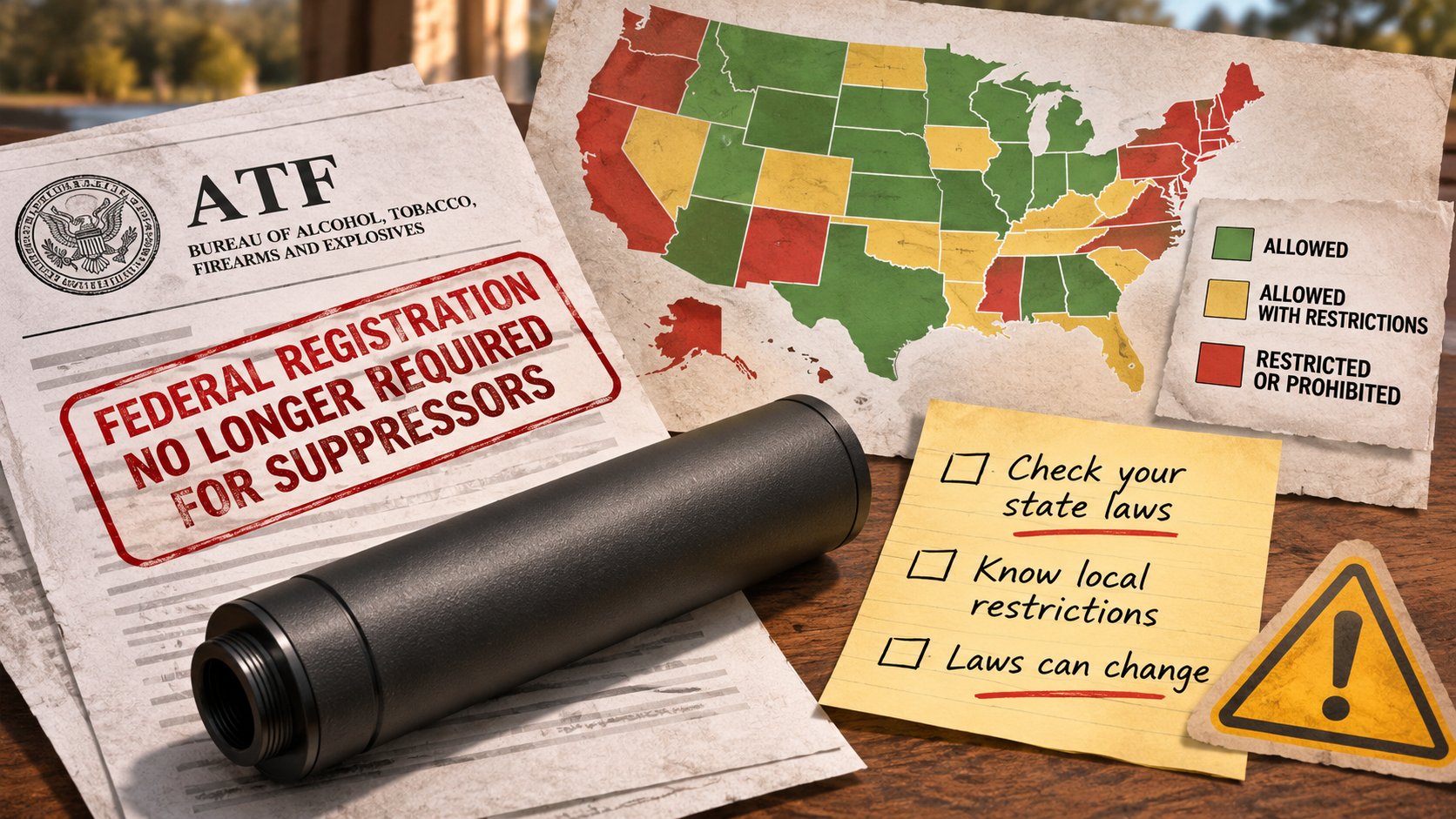
The rules for buying a suppressor have changed again since our August report. On October 9, the Bureau of Alcohol, Tobacco, Firearms and Explosives announced that it will no longer require National Firearms Act approval or registration for suppressors, short-barreled rifles, short-barreled shotguns or "any other weapons," effective immediately, according to an analysis by the law firm Bradley Arant published in the National Law Review. Machine guns and destructive devices remain fully regulated because the $200 tax still applies to them.
The change follows an August 5 ruling by a federal district court in Texas in Silencer Shop Foundation v. ATF, which found that the act's registration requirements could not stand once Congress had reduced the tax on these items to zero. That injunction protects only the plaintiffs and their customers, but the ATF describes its new policy as a nationwide decision not to enforce the requirements against anyone. The government has chosen not to appeal the ruling, the analysis says.
What has not changed: a suppressor is still a firearm under federal law, so buying one from a dealer still requires a Form 4473 and a background check. Dealers decide for themselves whether to keep filing the old forms.
State law is unaffected. Some states ban suppressors outright, and others require NFA items to be registered or possessed in line with federal law. Maryland State Police said on October 15 that NFA items made, bought or transferred in Maryland must still be approved and registered. Short-barreled rifles and shotguns still need approval to cross state lines; suppressors do not face the same transport rule.
The analysis stresses that this is the agency's discretionary policy, not settled law, and could change with a new tax, a reversal of the injunction or a decision to rescind it. Check your state's law and ask your dealer before you buy. This is general information, not legal advice.
Sources